Steamboats
 Soundtrack: [audio file couldnt be retrieved.]
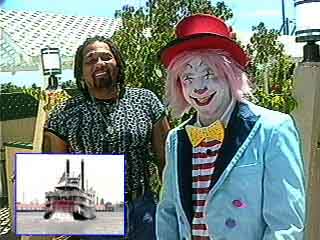
Cory the Clown and Aaron Neville visit New Orleans and Cory
travels on an actual steamboat. They explain the history of
steamboats.
Steamboats are fun. The first steamboat was demonstrated in 1787.
They were used on the river ways to bring cargo, cotton, sugar, and
people to their destinations. They were later used as show boats for
entertainment.
Calliopes were used on the boats to let people know the boat was
docked. The calliope uses the steam from the boat to make musical
sounds. The name "calliope" comes from the Greek goddess "muse of
sound."
Steamboats have a paddle wheel on the side or the back of the
boat. The stern (back of the boat) paddle wheel was popular after the
civil war. The paddle wheel draws just a few feet of water. The
paddle has four planks in the water for the best propulsion (to push
the boat forward.) The wheel spins about eighteen times per minute. A
steamboat travels about 15 miles an hour. A swift river will allow
the boat to go 16 to 17 miles per hour.
The original paddle boats ran on wood. In 1860, coal replaced
wood. In the 1950s, oil replaced coal. The early steamboats didn't
last long. They would often burn up because the fire used to create
the steam would burn the boat. It takes 250 pounds of steam just to
blow the big whistle. Whoa!
Today there are just a few steamboats remaining on the
Mississippi River. If you would like to take a ride, you can contact
the Natchez steamboat in New Orleans, Louisiana. It's a little bit of
Americana.

